
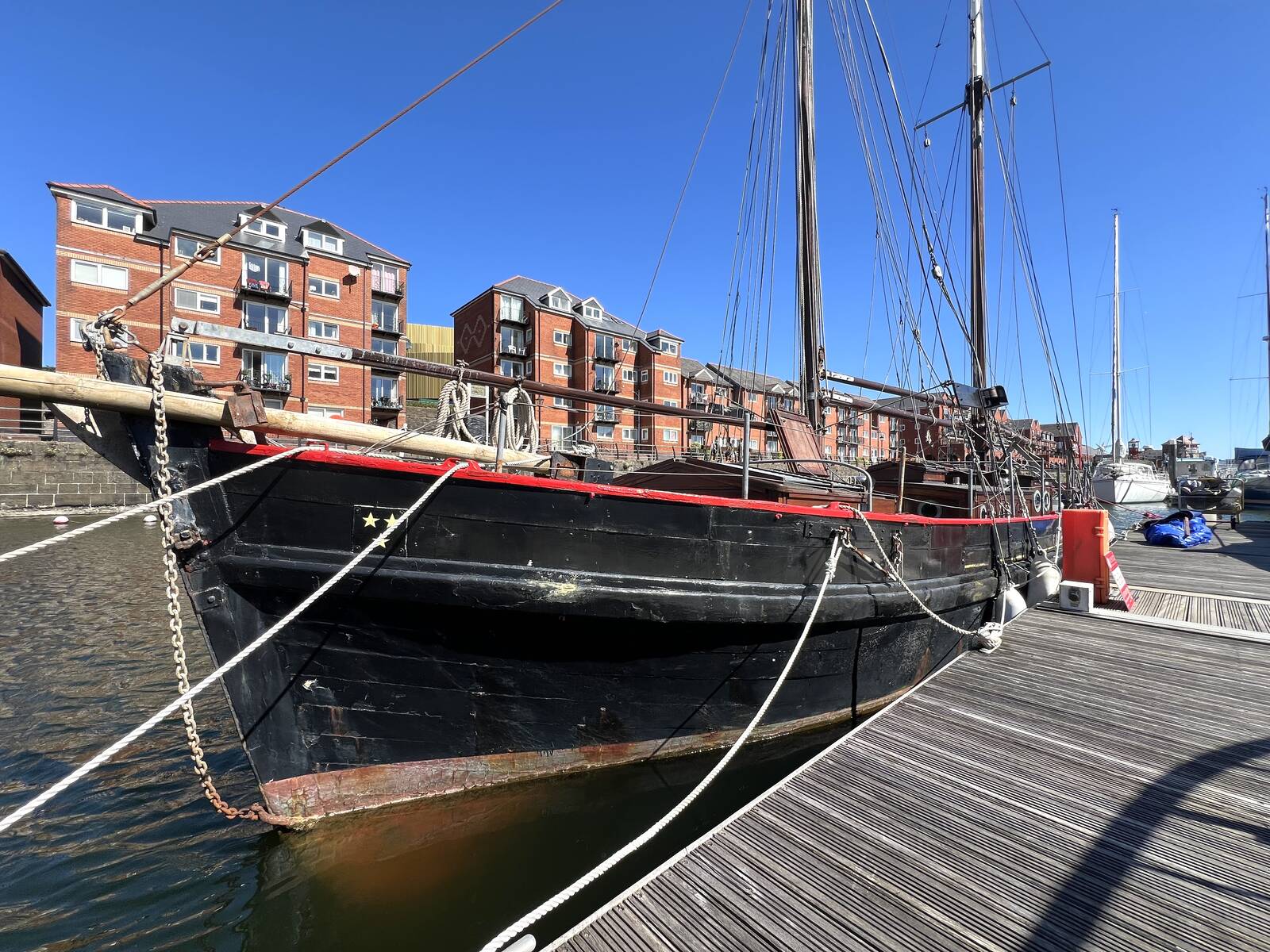
 Sailing yachts
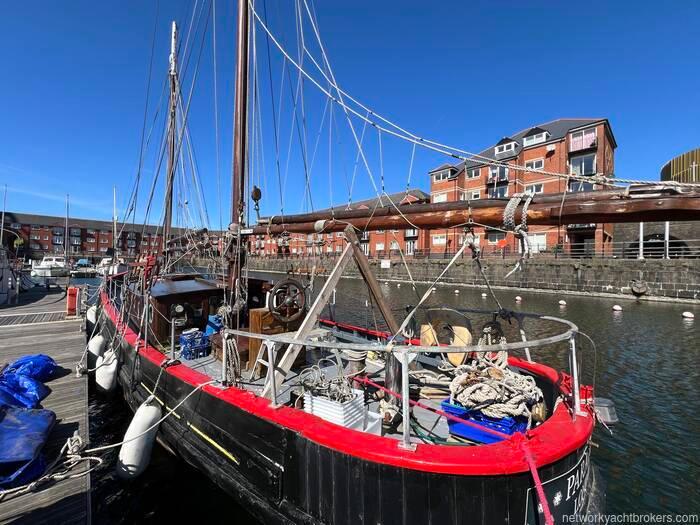 Sailing yachts
1940Year15.24 mLengthSwanseaLocation
Gaff-Rigged · 1940
Gaff-Rigged Schooner
£20,000
Listed by Network Yacht Brokers
Broker Remarks ‘Paradox’ is a beautifully crafted 1940 motor supply vessel, originally built in Malaya from rare native hardwoods including chengal and balanocarpus heimii — timbers renowned for their exceptional strength, durability, and long lifespan. Rich in character and maritime heritage, her design combines classic European influences with traditional Malaysian craftsmanship, creating a truly distinctive vessel.
Full listing & broker enquiry Explore the complete gallery, specifications and seller details on Tack & Jibe. Our boat listings partner
IN THE DETAILS
About this boat
From the selling broker.
Broker Remarks ‘Paradox’ is a beautifully crafted 1940 motor supply vessel, originally built in Malaya from rare native hardwoods including chengal and balanocarpus heimii — timbers renowned for their exceptional strength, durability, and long lifespan. Rich in character and maritime heritage, her design combines classic European influences with traditional Malaysian craftsmanship, creating a truly distinctive vessel.
After arriving in the UK in the late 1960s, Paradox was carefully restored and transformed into an elegant schooner, with quality oak decking, handcrafted cabin structures, and custom rigging designed in Brightlingsea. She has cruised extensively around the North Sea. A rare opportunity to own a unique piece of maritime history with proven seaworthiness and timeless appeal.
Owner Comments: 'Paradox' was built of native hardwood (chengal, balanocarpus heimii sp.) in Malaya in 1940 as a motor supply vessel and worked in that capacity until c.1968 when she was brought as deck cargo to the UK.
The hull shape (e.g. the vertical stem) suggests that she was designed by a European, but some elements of the workmanship and some features (e.g. the form of the stern: elliptical from an upswept counter) suggest a native Malaysian input.
Traces of navy grey paint revealed during cleaning and strengthening of the beam clamp/shelf in the engine compartment in 2005 may have been the first paint applied to the hull soon after commissioning (which raises the interesting point as to whose navy?) The local tradition seems to be to use fish and like oils only on hulls built in chengal.
Balanocarpus has a class 1 hardness rating and has a life expectancy in use of >40 years above ground and >25 years in the ground. There are 100 year old examples which have been used as railway sleepers and it is described as being commonly used for structural members requiring high strength and durability, railway sleepers, wharf and bridge constructions, poles, piles, mining timbers etc.
Knox-Johnson's Suhaili, the first vessel to be sailed single-handed non-stop around the world, was built entirely of this timber. The tree is now practically extinct in some areas in which it was formerly common but it is still in strictly controlled use in Malaysia itself. Survey reports show the substantial nature of her construction, this timber only seeming to have been used throughout the original hull.
There was though an oak-for-chengal plank replacement to the stern of the vessel by Alan Williams at St.Osyth Boatyard in 1992. There was too replacement of a small (60mm x 300 mm between lands on adjacent ribs) damaged section of 35 mm. hull planking), under Williams' supervision in 2005.
This work suggested that the hull between frames, planking, and ceiling midships had been lined with a cork/pitch (or similar) compound, so it may be that he vessel had been used to carry fish or other goods needing insulation at some point in its career. After arrival in the UK, the vessel became the subject of a writ served on the then owner.
This was subsequently redeemed and the vessel lay at Woodrolfe's yard, Tollesbury for some years. The oak decking and teak/oak cabin housings/superstructure were made by Aldous of Brightlingsea and at some point subsequently she was converted to schooner rig (the original pre-SSR DOT registration papers describe her as a ketch.)
She was rigged to the design and under the supervision of James Lawrence at Brightlingsea who also made the sails. The present owner has added a flying jib, foretopsail, and fisherman's topsail to Lawrence's original inventory (jib, forestaysail, foresail, main staysail, mainsail, main topsail). The engine, a Ford 2715 type, was bought new from Lansing Marine and fitted in Essex.
It has been maintained and run at intervals of 2/3 weeks normally when not in use and has been used regularly during the season. The vessel was subsequently based at St.Osyth Boatyard and was described by Woodrolfe's (who brokered the sale) as 'having cruised extensively in the North Sea area'.
All the suggestions for remedial or maintenance work suggested by Tony Tucker in his 2004/5 survey have now been completed by the owner and the vessel is in commission and regularly maintained.
Accommodation Flavell Vanessa two ring and oven gas cooker in galley Paloma PH-5-3F [Mark V] shower water heater in head, both serviced from LPG bottle on deck WC pedestal, with manual pumping via a swan neck through hull 80 gallon stainless fresh water tank in engine compartment Chart table with overhead red lighting Other lighting serves in all areas via 12v ring Lister 240 v diesel generator in lazarette, not currently mounted One diesel-burning Refleks heater in saloon, serviced from header tank in engine room Double bunk in saloon, two singles in focsle Single tailored mattresses (4) in blue upholstery to fit Mechanical and Rigging Ford 2710 series, 6 cylinder 5.8 litre Gearbox is a NewAge PRM 302.
Both cooled via manufacturers’ raw water heat exchangers. Main fuel tank 80 gallon & auxiliary 5 gallon tank both galvanised, gravity feed to lift pump on engine block, both in engine room. Bronze propellor, stainless steel prop shaft through hull via a packed gland. Sails In Duradon, weight as appropriate, with galvanised fittings.
Made traditionally by Lawrence, Brightlingsea unless otherwise stated. 1x gaff mainsail, triple reef points 1x gaff foresail, double reef points 1x main staysail 1x main foresail 1x jib with Wykeham Martin furling gear 1x main topsail, modern material, also by Lawrence, with jack spar 1x fisherman’s staysail 1x fore topsail 1x outer jib all of modern material, provenance unknown Metalwork galvanised or stainless steel Spars Mainmast by Nielsen, Gloucester, 2020 Foremast original Both of larch Remaining spars various dates and materials Awaiting replacement of damaged bowsprit Mast stays are of plastic coated galvanised steel with bottle screws Remaining standing rigging is of galvanised steel, regularly treated with preservative Running rigging (forestay, backstays and runners, bobstay, whisker stays etc.) of galvanised steel is adjusted via tackles The bowsprit and the associated gear can be pivoted vertically to clear the stem Inventory Deck Fittings Mushroom deck vents in stainless Anchor winch and smaller pieces galvanised or stainless steel Anchors: one 50 lb. plough anchor set to 50 m. 2 inch chain coming in to a winch at the bitts, two fisherman’s anchors 50 lb. stored in the lazarette There is a manually operated bilge pump to starboard of the engine hatch cover Stanchions are of galvanised steel from stem along the length of the vessel Steering Manual wheel steering, or autohelm SeaTalk 100/300 Autohelm/Autopilot, an ST50 PLUS Steering Compass, and a Raytheon ST6000 Control Unit The hydraulic machinery by Wagner is in good working order There is a tiller alternative, tiller included Navigation/safety equipment VHF GPS Autohelm (complete and in fault-free recent use), disconnected awaiting connection to GPS Miscellaneous One overall canvas cover, in 4 sections, condition fair.
Two rail level canvas dodgers for afterdeck Covers for focsle (condition poor) and saloon clerestory Sail covers for deck use and bags for storage Some ~1000m of line in all sizes likely to be used, mostly in traditional styles 2x galvanised boathooks.
KEEP EXPLORING
A few more to consider.
Sailing yachts Sailing yachts
 Sailing yachts